Research
Here, I describe my current research interests. Some of these relate to my main academic posting in "Digital Chemistry" at UCD, while others are far afield. For information about my research group, check out the CoReACTER!
(Directed) Hypergraph TheoryHypergraphs are generalizations of graphs. Whereas in graphs, edges encode binary relationships, connecting always two vertices, in hypergraphs, the analogous hyperedges can encode relationships involving arbitrary numbers of vertices. Though hypergraphs can always be represented as biparite graphs, there are a number of applications where hypergraphs are the more natural object of study. These include chemical reaction networks (CRNs, see below), where chemical reactions can be represented as directed hyperedges from the reactants (tail) to the products (head). In spite of their utility, hypergraphs have not received nearly as much attention in the fields of mathematics and computer science as graphs. Directed hypergraphs, in particular, have been neglected in the literature. I've been slowly trying to help remedy this situation. In addition to developing open source codes for hypergraph analysis, I've been working on formalizing undirected and directed hypergraph theory and doing some mathematical and statistical analysis on CRN-like directed hypergraphs. | 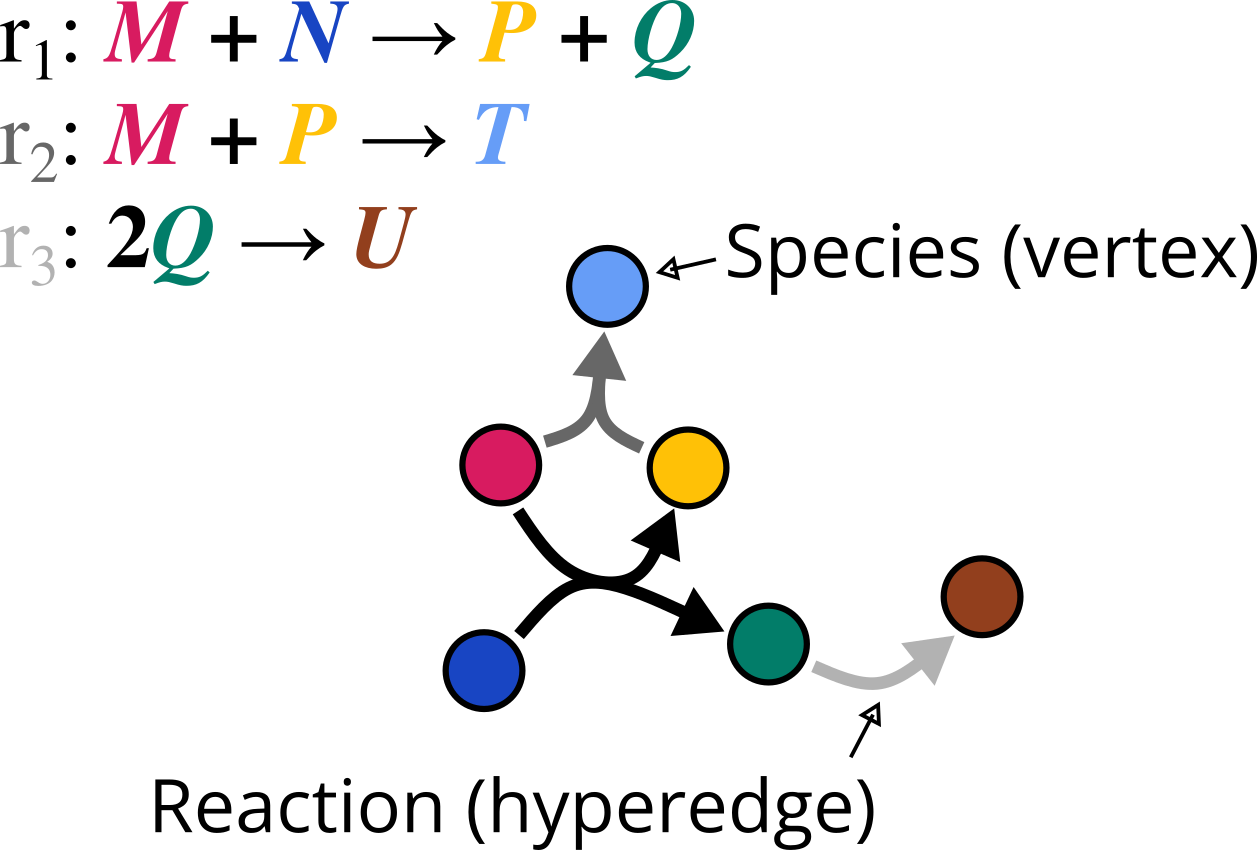 |
Machine Learning on Chemical Reaction NetworksIn recent years, interest in data science and machine learning (ML) in the chemical sciences has exploded. It's now common to use graph-based machine learning to predict the properties of molecules, materials, and even chemical reactions. However, there's been comparatively few developments applying ML to predict the properties of chemical networks. I'm currently working to develop tools for chemical reaction network machine learning, or CRN-ML. We won't know until we try, but I believe that CRN-ML could help us to more efficiently predict species and reaction properties while also unlocking totally new capabilities that are only possible with network-level analysis. | 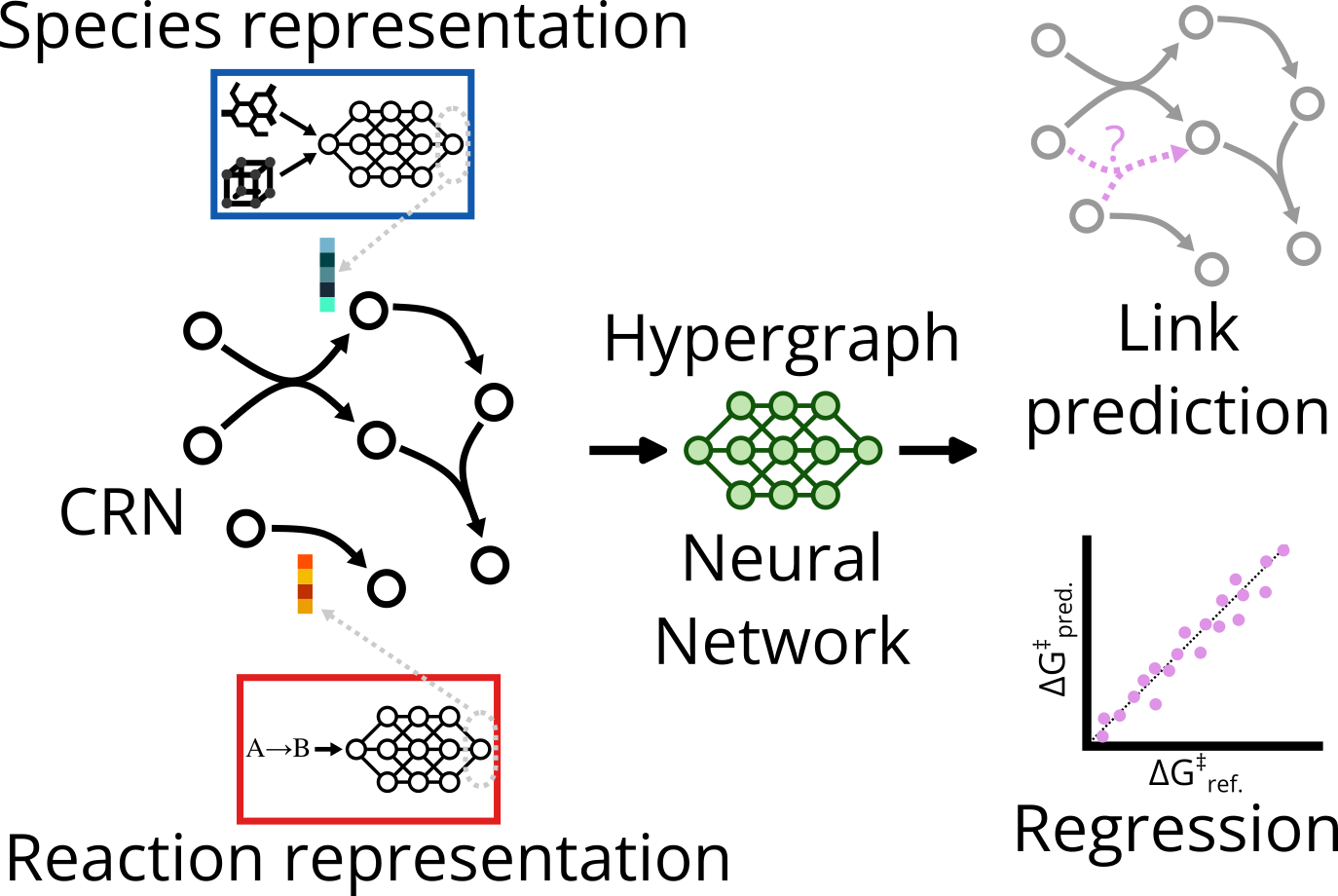 |
Mechanistic Analysis in Electrochemistry"Rational design" has become a buzzword of late. Chemical scientists want to be able to design optimal, purpose-built molecules and materials based on consistent design rules, rather than discovering such compounds serendipitously or through brute-force trial and error. Relatedly, it is a long-term goal for researchers to be able to rationally design synthesis procedures to create these desired, often novel compounds. While rational synthesis planning and even complete retrosynthesis is possible in many areas of conventional organic chemistry, rational design remains a far-off goal for electrochemistry, where reactivity is often extremely complex, often involving reactions in multiple phases and depending sensitively on the electrode, supporting electrolyte, and electrochemical conditions (i.e., potential and current) used. I'm interested in advancing our understanding of electrochemistry and electrosynthesis using a variety of tools from computational chemistry and data science. My prior research in this area has included conventional quantum chemistry and atomistic molecular dynamics simulations as well as mesoscale and continuum-scale analyses informed by elementary reaction mechanisms. I continue to be interested in fundamental and multi-scale modeling of electrochemical reactivity, with cross-talk between anode and cathode being an area of particular focus. CRN analyses and machine learning (either as a method to predict reactive and transport properties or as a method to accelerate kinetic and dynamic simulations) supplement my modeling efforts. | 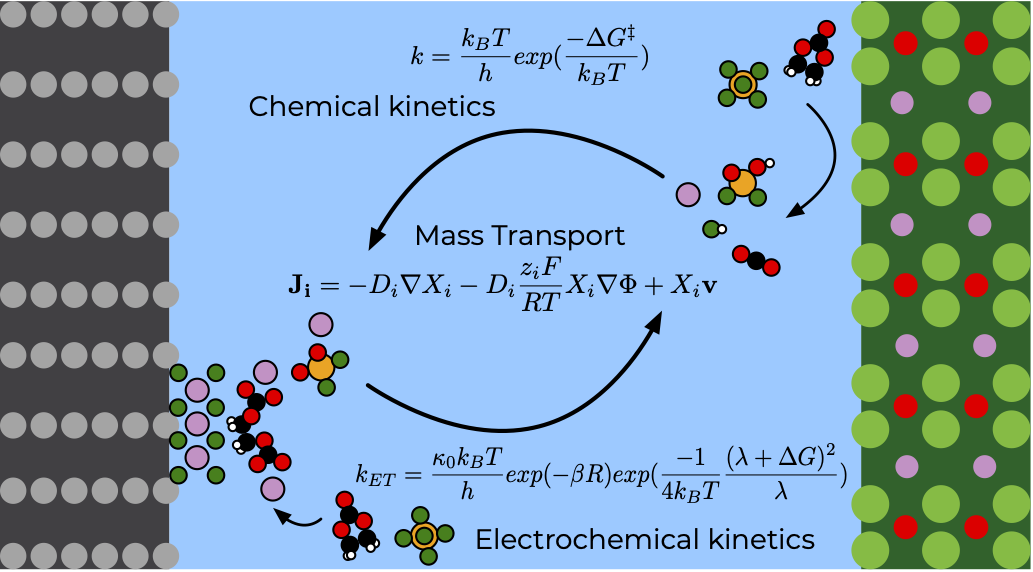 |
Scientific and Chemical EthicsResearch and applications in the chemical sciences have immense moral consequences. While chemistry has the power to save lives, as exemplified by the development of stable vaccines, pharmaceuticals, and fertilizers to improve agricultural yield (among other chemical developments), it has also been a force for tremendous destruction, whether intentional (e.g., chemical weapons; militarized chemicals such as Agent Orange; the use of Zyklon B in the Nazi genocides against those who were Jewish, Roma, queer, and/or disabled) or unintentional (e.g., tetraethyl lead as an additive in gasoline causing mass brain damage; greenhouse gas emissions from combustion and other chemical processes causing climate change; plastics poisoning the environment and human and non-human organisms). Chemists must carefully weigh the value and the dangers of the work that they pursue and the substances they design, create, and use, yet the ethics of chemistry are neither widely discussed in the scholarly literature nor widely taught to chemistry students at the undergraduate or graduate levels. This is a receipe for disaster in the gravest sense. My interest in scientific and chemical ethics began amid the recent hype around so-called "artificial intelligence" ("AI") and foundation models. I was (and remain) concerned that scientists were increasingly turning to tools that I believe(d) to be dangerous and in fact harmful to scientific research and education. This led to my study on the scientific and chemical ethics of foundation models. As part of this study, I conducted a grounded theory analysis of chemical codes of ethics/codes of conduct, synthesizing from them a notion of chemistry's stakeholders and the ethical obligations of chemists to those stakeholders. I continue to be interested in scientific and chemical ethics, including applied and professional ethics related to emerging technologies in and around chemistry. I am also actively engaged in pedagogical projects to teach chemistry students to think critically about ethical issues in research and educational settings. | 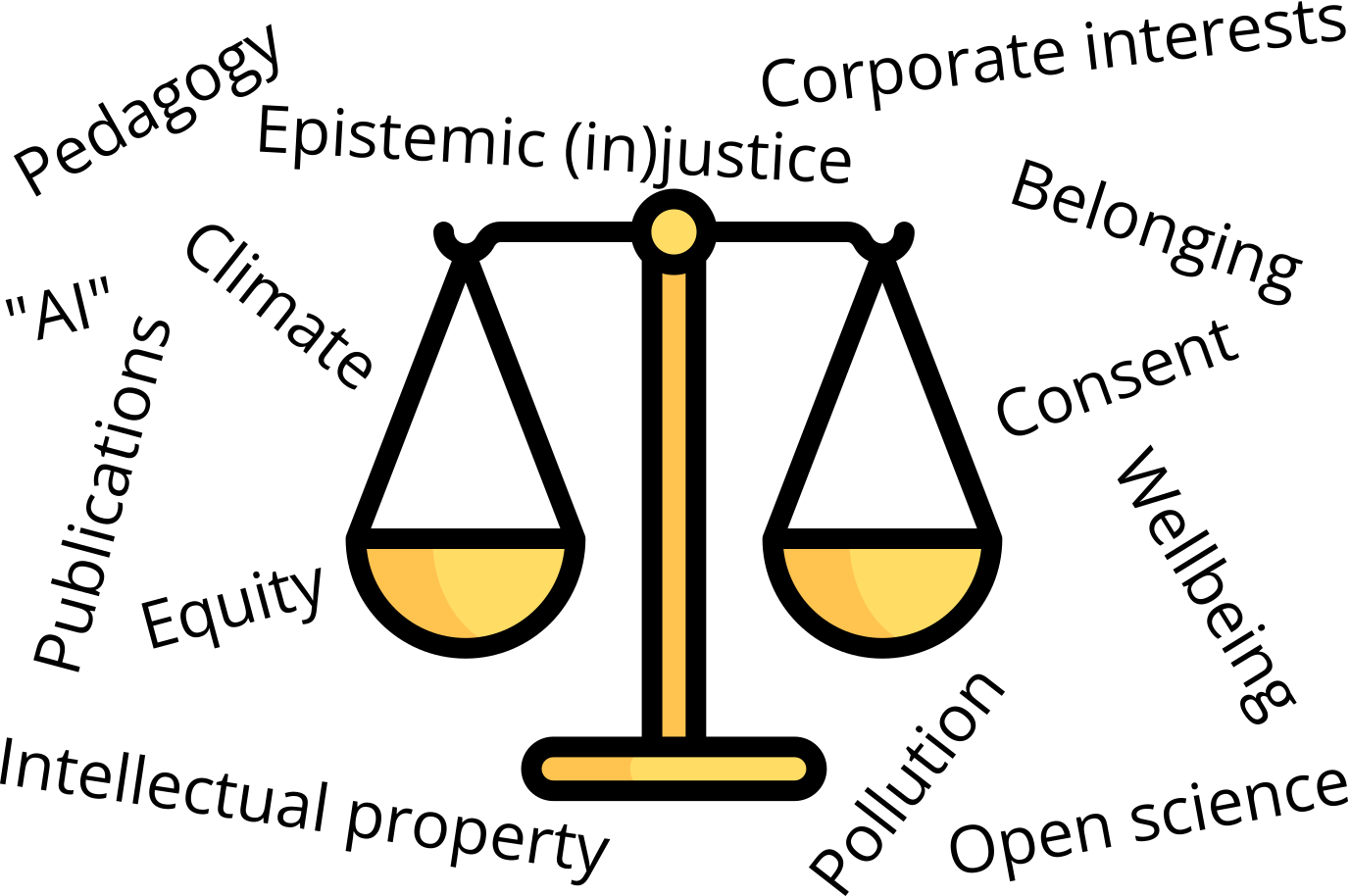 |
Science, Madness, and the SelfThere is a growing understanding that there is a "mental health" crisis in science. The social and professional environment scientists work in is frequently toxic and even traumatizing; even when scientists avoid the worst outcomes, scientific work culture often values productivity over wellbeing, and the hypersane, hyperrational philosophy espoused by many scientists make even conversations about emotional and cognitive states challenging. My interest in madness (a non-pathologizing and more expansive term than the sanist "mental illness") began from this point, leading to questions such as: What is the relationship between science and madness? Are the two totally incompatible, or do they/can they coexist? How could science change (or, how could something replace science) to embrace and be inclusive of Mad ways of knowing? At present, I'm trying to combine science and technology studies with neurodiversity studies and Mad studies to understand the madness-science relationship. I'm also engaged in (auto)ethnography related to experiences of and relating to madness. My work in this area is in the very earliest stages, madness a curiosity; it might lead to nothing, or it might be incredibly fruitful and generative. |  |